
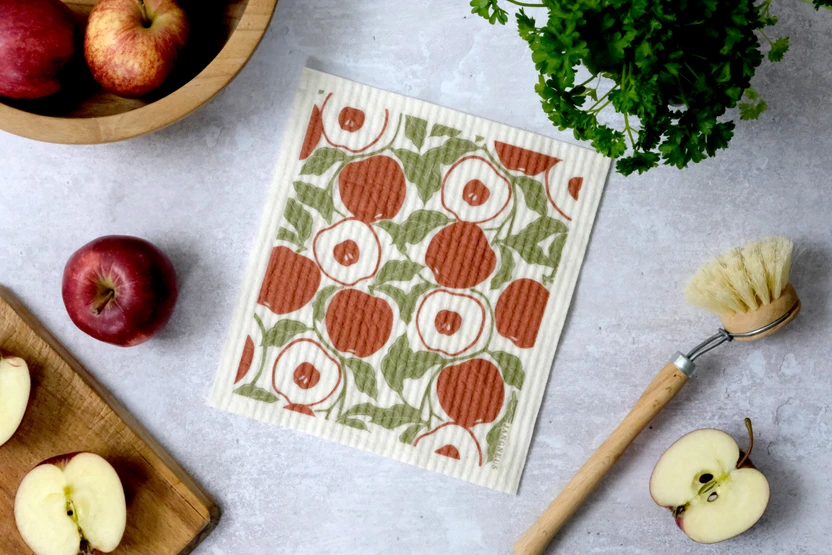
How to Use a Swedish Dishcloth: Everyday Kitchen Uses
Posted by Esthetic Living Team on Sep 14th 2026
A Swedish dishcloth is simple to use, but getting the best results from it is slightly different from using a paper towel or a dry cotton cloth. The most important thing to know is that a Swedish dishcloth works best when it is wet first, wrung out, and then used for wiping, cleaning or absorbing spills.
Once damp, the cellulose-and-cotton material becomes soft and flexible. That makes it useful for a wide range of everyday kitchen jobs, from wiping counters to washing dishes. Jangneus Swedish dishcloths sold by Esthetic Living are made from 70% cellulose and 30% cotton and can absorb up to 15 times their own weight in water.
If you are using one for the first time, this guide explains how to use a Swedish dishcloth properly, the jobs it handles best, and a few practical habits that can make it easier to keep one in regular rotation.
How to Use a Swedish Dishcloth
The basic method is straightforward: wet the cloth thoroughly, wring out the excess water, and then use it while damp. A dry Swedish dishcloth feels crisp and firm a bit like heavy stock paper and will not absorb a spill as efficiently as it does once it has been moistened.
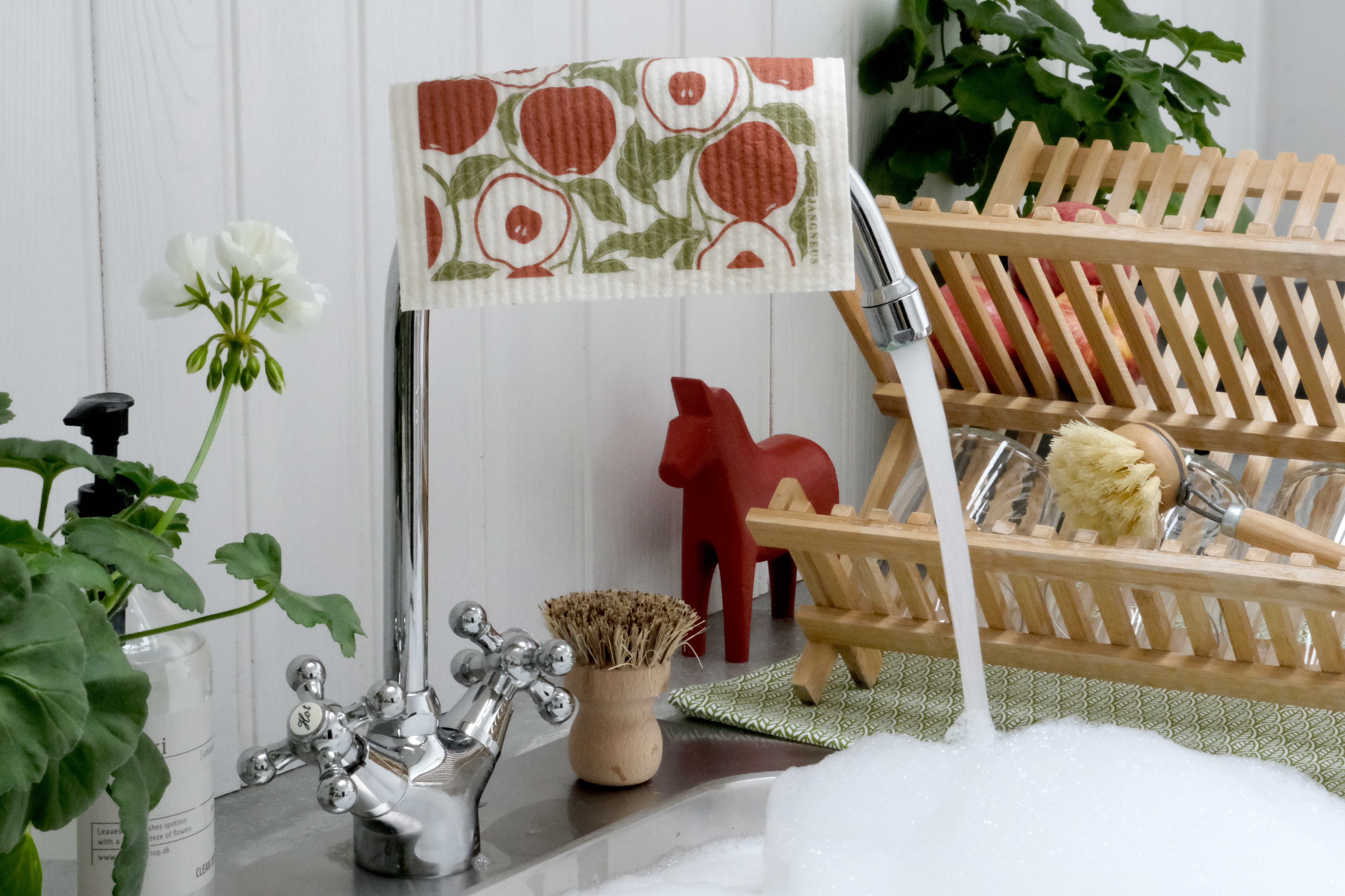
After use, rinse the cloth under clean water, wring it out again and leave it somewhere to dry. Hanging it over the faucet or placing it where air can circulate around it is a simple way to keep it ready for the next job.
Everyday Swedish Dishcloth Uses in the Kitchen
One reason Swedish dishcloths work well in the kitchen is that the same small cloth can handle several routine jobs. They are best used for everyday wiping and cleaning rather than heavy scrubbing.
Wiping kitchen counters
Use a damp Swedish dishcloth to wipe crumbs, water spots and everyday mess from counters and kitchen islands. Its flat shape makes it easy to move across a surface and around small appliances.
Cleaning up spills
For water, coffee and other everyday spills, wet the cloth first, wring it out and then press or wipe over the liquid. Because Jangneus dishcloths can absorb up to 15 times their own weight in water, one small cloth can handle a surprising amount of moisture.
Washing dishes
A Swedish dishcloth can also be used for routine dish washing. Once damp, it becomes flexible enough to move around plates, glasses and bowls. For heavily baked-on or stuck food, you may still prefer a dedicated scrubber.
Wiping around the sink
Use it to wipe the sink rim, faucet area and the water that collects around the sink after washing dishes. Rinse the cloth thoroughly afterward and leave it to dry.
Cleaning dining tables
A damp cloth works well for wiping dining tables after meals, particularly for crumbs and light food residue. If the same cloth is used in several kitchen areas, rinse it between jobs.
Wiping cabinet fronts and appliance exteriors
For light everyday marks on cabinet fronts, refrigerator doors and other hard appliance exteriors, a damp Swedish dishcloth can be a convenient alternative to reaching for disposable paper towels.
Using it as a reusable paper-towel alternative
Many Esthetic Living customers use Swedish dishcloths for jobs where they would otherwise reach for paper towels. They will not replace paper towels in every situation, but repeated countertop wiping and routine spill cleanup are natural places to make the switch.
How Much Water Should You Use?
You only need enough water to soften the cloth completely. Once it is flexible, wring it out firmly. For normal wiping, a damp cloth is usually easier to control than one that is dripping wet. If it begins to dry while you are cleaning, rinse it again and continue.
For spills, the same principle applies: dampen the cloth first. A dry Swedish dishcloth will not absorb liquid nearly as efficiently as a damp one. This is one of the most useful habits to remember when switching from paper towels.
 Can You Use a Swedish Dishcloth With Cleaning Products?
For ordinary kitchen wiping, water may be enough for many light jobs. If you normally use a household surface cleaner, follow the instructions for that cleaner and make sure it is suitable for the surface you are cleaning. Rinse the dishcloth thoroughly afterward so product residue is not left in the material.
For food-preparation areas, regular rinsing and washing are especially important. It is also sensible to keep separate cloths for jobs or areas where you would not want cross-contamination.
A Simple Two-Cloth Routine
At Esthetic Living, we recommend keeping two Swedish dishcloths in the kitchen. That makes it easy to have one available while the other is being washed or drying. One practical routine is to wash a used cloth whenever you run the dishwasher, then keep the clean one ready for the next round of kitchen cleaning.
Jangneus Swedish dishcloths can be washed in the washing machine or on the top rack of the dishwasher. If you use the washing machine, air drying is recommended rather than putting the cloth in the dryer, especially if you want to help preserve the printed design.
How Often Should You Change or Wash the Cloth?
There is no need to treat a Swedish dishcloth as disposable, but it should still be washed regularly. How often depends on how heavily you use it and what you use it for. If it has been used around food, greasy surfaces or frequent spills, wash it more often rather than simply continuing to rinse it.
Even a reusable cloth can eventually develop an odor if it is used for a long time without proper washing. If a cloth becomes permanently stained, damaged or difficult to clean, it is time to replace it.
Swedish Dishcloths for Kitchen Use: What They Are Best At
A Swedish dishcloth is at its best when used for repeated light-to-medium cleaning jobs throughout the day. It is compact, absorbent and easy to rinse, which makes it particularly useful for surfaces that need frequent attention.
It is less suited to aggressive scrubbing, jobs involving sharp edges or situations where a disposable cleaning material is preferable for hygiene. Thinking of it as a reusable everyday wiping cloth rather than an all-purpose replacement for every cleaning tool is the easiest way to use it effectively.
Make It Part of Your Everyday Kitchen Routine
Using a Swedish dishcloth quickly becomes intuitive: wet it, wring it out, wipe, rinse and leave it to dry. That simple routine is what makes the cloth useful for counters, dishes, spills, tables and other everyday kitchen surfaces.
Because it can be washed and reused, one small cloth can take the place of many disposable paper towels used for routine wiping. And with Jangneus designs, the cloth can stay visible near the sink as part of the kitchen rather than something that has to be hidden away.
Explore the Jangneus Swedish Dishcloth collection at Esthetic Living for Scandinavian-inspired patterns and colors.
You can also coordinate them with Jangneus kitchen towels for a matching practical kitchen setup.
Frequently Asked Questions
Do you use a Swedish dishcloth wet or dry?
Use it damp. Wet the cloth until it becomes soft, wring out the excess water and then use it for wiping or absorbing spills.
Can you use a Swedish dishcloth to wash dishes?
Yes. A damp Swedish dishcloth can be used for routine dish washing, although a separate scrubber may be better for heavily stuck-on food.
Can Swedish dishcloths be used on kitchen counters?
Yes. Wiping counters, islands and tables is one of their most common everyday uses.
Can you use a Swedish dishcloth instead of paper towels?
For many routine spills and wiping jobs, yes. Many Esthetic Living customers use them as a reusable alternative to paper towels, although they do not need to replace paper towels in every situation.
How do you clean a Swedish dishcloth after using it?
Rinse it thoroughly, wring it out and let it dry between uses. Jangneus Swedish dishcloths can also be washed in the washing machine or on the top rack of the dishwasher when a deeper clean is needed.