
What Is a Swedish Dishcloth? Materials, Benefits & How It Works
Posted by Esthetic Living Team on Sep 7th 2026
If you have ever seen a thin, colorful cloth in a Scandinavian kitchen and wondered what makes it different from an ordinary sponge, there is a good chance you were looking at a Swedish dishcloth. These compact cleaning cloths have been used in Swedish kitchens for decades and have become increasingly popular with people looking for a reusable, highly absorbent alternative for everyday wiping and cleaning.
A Swedish dishcloth sits somewhere between a sponge, a dishcloth and a paper towel. It is flexible when wet, firm when dry, easy to rinse and designed to be used repeatedly. At Esthetic Living, the Jangneus Swedish dishcloths in our collection are made from 70% cellulose and 30% cotton, are machine washable and are designed in Sweden. They are also highly absorbent, soaking up as much as 15 times their own weight in water.
So what is a Swedish dishcloth, exactly? This guide explains what it is made of, how it works, where it can be used and why it has become such a practical addition to the kitchen.
What Is a Swedish Dishcloth?
A Swedish dishcloth is a reusable kitchen cleaning cloth made from a blend of cellulose and cotton. When dry, it feels relatively firm and lightweight. Once wet, the material softens and becomes flexible, making it useful for wiping counters, washing dishes and cleaning up spills.
Unlike a disposable paper towel, a Swedish dishcloth is intended to be rinsed, washed and used again. Unlike a thick kitchen sponge, it is flat, so dries quickly and is naturally anti-microbial.
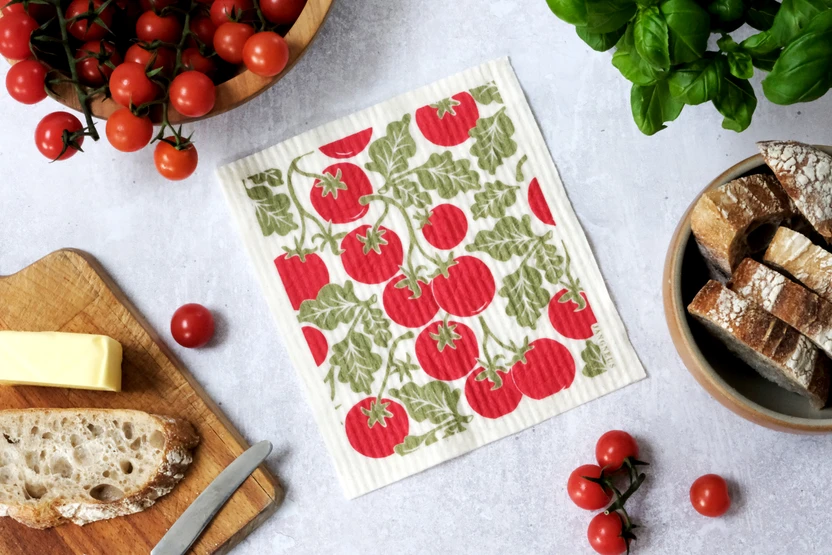
This reusable sponge has been used in Swedish kitchens since the 1950s. Today, Swedish dishcloths are available in a wide range of colors and printed designs, so they can function as both a practical cleaning tool and a small decorative detail in the kitchen.
What Are Swedish Dishcloths Made Of?
The material is one of the main reasons a Swedish dishcloth behaves differently from a standard cotton cloth or synthetic sponge. The Jangneus dishcloths sold by Esthetic Living are made from 70% cellulose and 30% cotton.
Cellulose is a plant-derived material (wood pulp) that gives the cloth much of its absorbency and sponge-like quality. Cotton adds strength and flexibility. Together, the two materials create a cloth that can soak up liquid while remaining easy to rinse, wring out and reuse.
The Jangneus cloths are also described as 100% biodegradable. That makes them a useful option for households trying to reduce reliance on disposable cleaning products, particularly paper towels used for routine spills and wiping.
 How Does a Swedish Dishcloth Work?
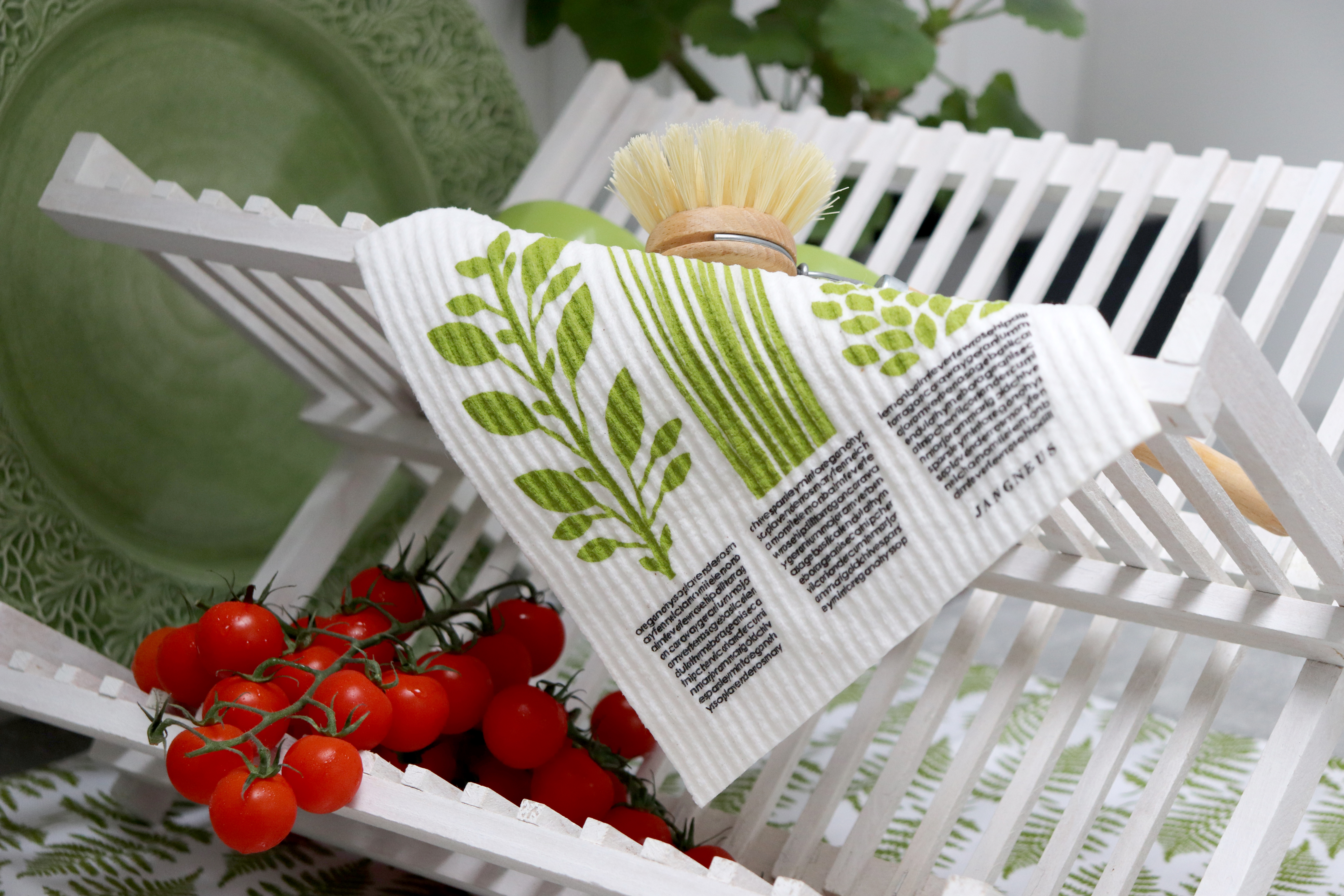
The simplest way to understand how a Swedish dishcloth works is to look at what happens when it gets wet. The cellulose-and-cotton structure absorbs water and becomes soft and pliable. That gives it enough flexibility to wipe around countertops, sinks, tables and dishes while still holding a considerable amount of moisture.
The Jangneus cloths carried by Esthetic Living can absorb up to 15 times their own weight in water. For everyday kitchen use, that means a small cloth can handle spills that might otherwise require several sheets of paper towel.
After use, the cloth can be rinsed and wrung out before being left to dry. Because it is flat rather than thick and foam-filled, it is simple to rinse thoroughly. Also, as it dries so quickly, it is naturally anti-microbial unlike a sponge which is a haven for bacteria. When it needs a deeper clean, it can be washed, either in the washing machine or top rack of the dish washer.
Key Benefits of a Swedish Dishcloth
1. Highly absorbent — Absorbency is one of the clearest Swedish dishcloth benefits. A small cloth can hold a surprising amount of water, making it useful for wiping spills, wet counters and kitchen surfaces.
2. Reusable — A reusable Swedish dishcloth can be rinsed and used many times instead of being discarded after a single spill. That makes it particularly practical for everyday cleaning tasks and more economical than single use paper towels.
3. Machine washable — When normal rinsing is no longer enough, the Jangneus cloths can be machine washed. This makes routine care straightforward and helps keep the cloth in regular rotation.
4. Useful for several kitchen jobs — Swedish dishcloths for kitchen use are not limited to one task. They can be used for wiping countertops, washing dishes, cleaning tables and handling everyday spills.
5. Compact and easy to store — Because the cloth is thin and flat, it takes up very little room compared with bulky sponges or rolls of paper towel. It can be stored near the sink or wherever it is most convenient for daily cleaning.
6. Decorative as well as practical — Jangneus dishcloths bring Scandinavian pattern and color into a very functional kitchen item. Matching Jangneus kitchen towels are also available, making it possible to coordinate practical linens rather than treating cleaning products as purely utilitarian.
Where Can You Use a Swedish Dishcloth?
A Swedish dishcloth is best suited to routine household wiping and cleaning. Common uses include:
- Wiping kitchen counters and islands
- Mopping up water and everyday spills
- Washing dishes and wiping around the sink
- Cleaning dining tables and other hard surfaces
- Wiping cabinet fronts and appliance exteriors
- Using as a reusable alternative to paper towels for many light cleaning jobs
For hygiene, it is sensible to keep cloths used for different areas separate when needed and to wash them regularly. A kitchen cleaning cloth should also be replaced if it becomes permanently stained, damaged or difficult to clean.
A Note From the Esthetic Living Team
- We have been selling and using Swedish dishcloths for more than 10 years. We wash ours in the dishwasher and hang them over the faucet to dry.
- We recommend always having two in your kitchen and washing one every time you run your dishwasher, so you always have a clean one ready to use.
- Even though we advertise them as odor-free, like any reusable cloth, they can eventually develop an odor if they are used for a long time without being washed.
- If you wash your dishcloths in the washing machine, we recommend air drying them rather than putting them in the dryer. The printed designs should last around 6 months with normal use, but they will fade more quickly if you regularly dry them with your laundry.
- Most of our customers use Swedish dishcloths as a reusable alternative to paper towels.
- If you are wiping up a spill, don't forget to wet the dishcloth first and wring it out. A dry dishcloth will not absorb spills nearly as efficiently as a damp one.
Swedish Dishcloth vs. Paper Towels and Sponges
A Swedish dishcloth does not need to replace every other cleaning product in the kitchen, but it can reduce the number of disposable items used for routine jobs.
Compared with paper towels, the main difference is reusability. Paper towels are convenient for single-use cleanup, while a Swedish dishcloth can be rinsed and used again. For repeated wiping throughout the day, that can make the dishcloth the more practical option.
Compared with a sponge, a Swedish dishcloth is flatter and easier to spread across a surface. It also takes up very little storage space and can be machine washed. Some people will still prefer a sponge for heavy scrubbing, so the two products can serve different purposes rather than being direct substitutes in every situation.
How to Care for a Swedish Dishcloth
Good care is simple: rinse the cloth after use, wring out excess water and allow it to dry between jobs. Wash it regularly regularly, especially if it is being used frequently around food preparation and kitchen surfaces.
The Jangneus Swedish dishcloths sold by Esthetic Living are machine washable. Avoid treating a reusable cloth as if it were disposable; regular rinsing and washing are part of what allows it to stay useful over time.
We will cover washing, sanitizing, drying and care in more detail in our separate guide, “How to Wash and Clean Swedish Dishcloths.”
 Are Swedish Dishcloths a Good Fit for Your Kitchen?
A Swedish dishcloth is especially useful if you want one small cloth that can handle repeated wiping, absorb spills and be washed for reuse. It is also a natural fit for kitchens where design matters, because the cloth can remain visible near the sink without looking purely functional.
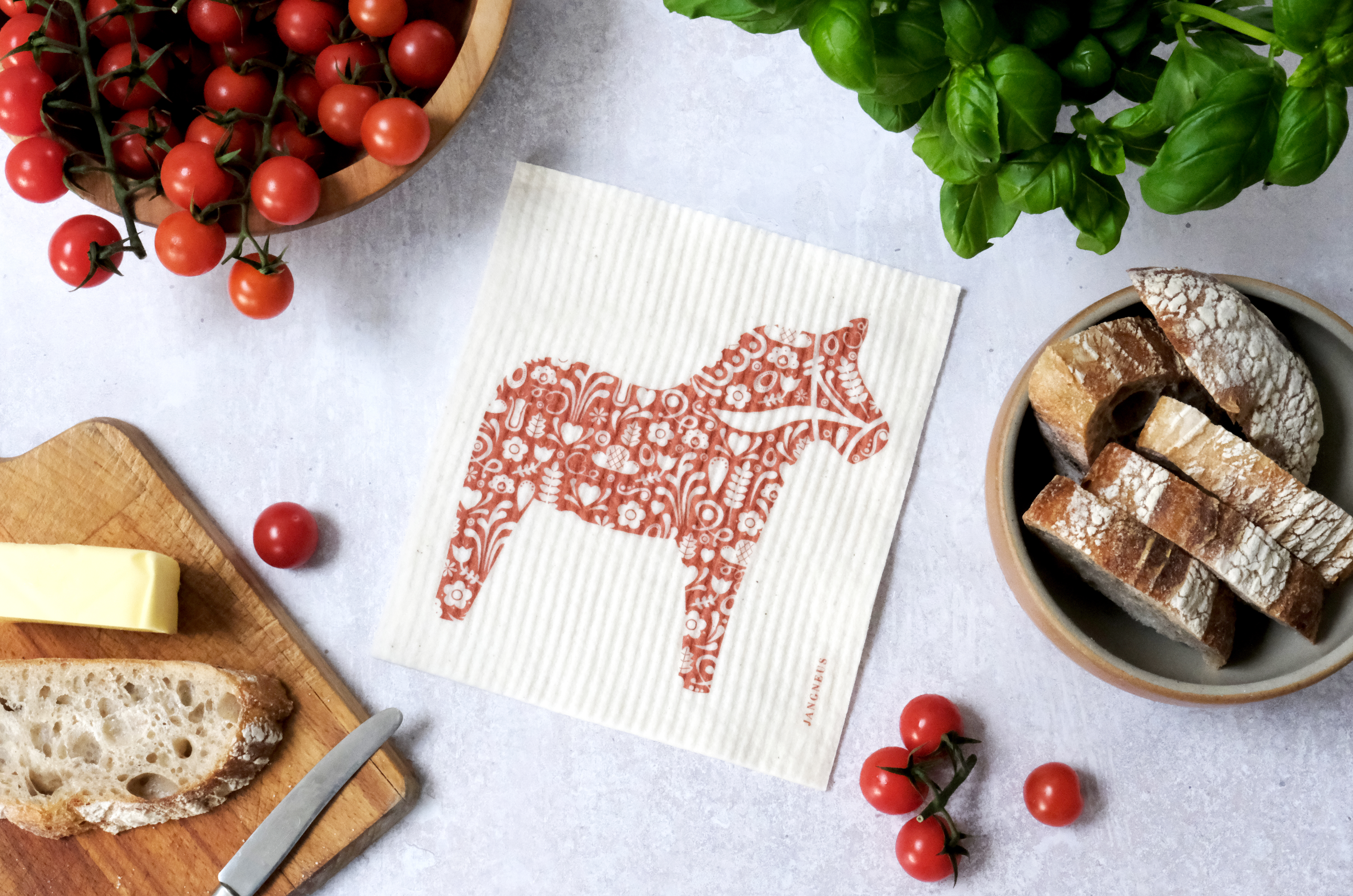
The Jangneus collection combines the practical cellulose-and-cotton format with Scandinavian-inspired patterns, so you can choose a design that works with your kitchen rather than hiding the cloth away after every use.
If you are new to Swedish dishcloths, start by using one for your most common countertop and spill-cleaning jobs. Once you get used to how quickly the material absorbs water and how little space it takes up, it becomes easy to see why this simple kitchen cloth has remained popular for so long.
Frequently Asked Questions
What is a Swedish dishcloth?
A Swedish dishcloth is a reusable cleaning cloth typically made from cellulose and cotton. It becomes soft and flexible when wet and can be used for wiping, washing dishes and cleaning up spills.
What are Swedish dishcloths made of?
The Jangneus Swedish dishcloths sold by Esthetic Living are made from 70% cellulose and 30% cotton.
Are Swedish dishcloths reusable?
Yes. They are designed to be rinsed, washed and used repeatedly rather than thrown away after one use.
Can Swedish dishcloths be machine washed?
Yes. The Jangneus cloths in the Esthetic Living collection are machine washable.
How absorbent is a Swedish dishcloth?
Jangneus Swedish dishcloths can absorb up to 15 times their own weight in water.
Are Swedish dishcloths biodegradable?
The Jangneus Swedish dishcloths sold by Esthetic Living are 100% biodegradable.
Explore Swedish Dishcloths at Esthetic Living
Browse the Esthetic Living collection of Jangneus Swedish dishcloths in a range of Scandinavian-inspired colors and patterns.