
How Long Do Swedish Dishcloths Last? Storage, Drying & When to Replace Them
Posted by Esthetic Living Team on Sep 24th 2026
Swedish dishcloths are designed for repeated everyday use, making them a practical alternative to disposable paper towels and single-use cleaning products. But because they are reusable, one common question is: how long do Swedish dishcloths last?
There is no single lifespan that applies to every cloth. How long yours lasts depends largely on how often you use it, what you clean with it, how regularly you wash it, and most importantly, how you store and dry it between uses.
With a simple care routine, you can keep your Swedish dishcloth fresh, functional and ready for everyday kitchen cleaning for longer.
How Long Do Swedish Dishcloths Last?
The lifespan of a Swedish dishcloth depends on how it is used and cared for.
A cloth used several times every day for dishes, countertops and spills will naturally experience more wear than one used only occasionally. Frequent washing, heavy scrubbing and the types of surfaces being cleaned can also affect how quickly the material begins to wear.
Rather than relying on an exact number of days or months, it is better to pay attention to the condition and performance of the cloth.
We typically advise our customers to change them when the design starts fading. That would probably happen after 6 months of usage if you wash them every day.
That does not mean that they are not functional anymore. It is however probably a sign that they can now be used for other purposes around the house. Our advice would then be to put them in your cleaning bucket and use them more as cleaning rags around the house.
Why Proper Drying Matters
One of the most important parts of Swedish dishcloth care happens after you finish cleaning.
A Swedish dishcloth is designed to absorb a significant amount of moisture. That makes it useful for spills and cleaning, but it also means the cloth should be given an opportunity to dry properly between uses.
After using your dishcloth:
- Rinse it thoroughly.
- Squeeze or wring out excess water.
- Spread it out or hang it somewhere with good airflow.
- Allow it to dry before its next use whenever possible.
Avoid leaving a wet dishcloth crumpled in the sink, trapped underneath other cleaning items or sitting in standing water.
Proper drying makes everyday care easier and helps keep your reusable cloth ready for its next use.
How to Dry a Swedish Dishcloth
Swedish dishcloths become soft when wet and firm again as they dry. This change in texture is normal.
The simplest way to dry one is to remove as much excess water as possible and then place it somewhere where air can circulate around the cloth.
You might:
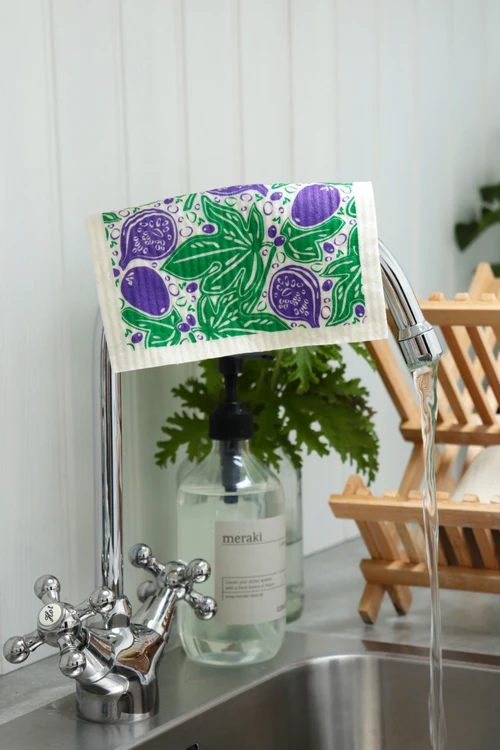
- drape it over the edge of the sink;
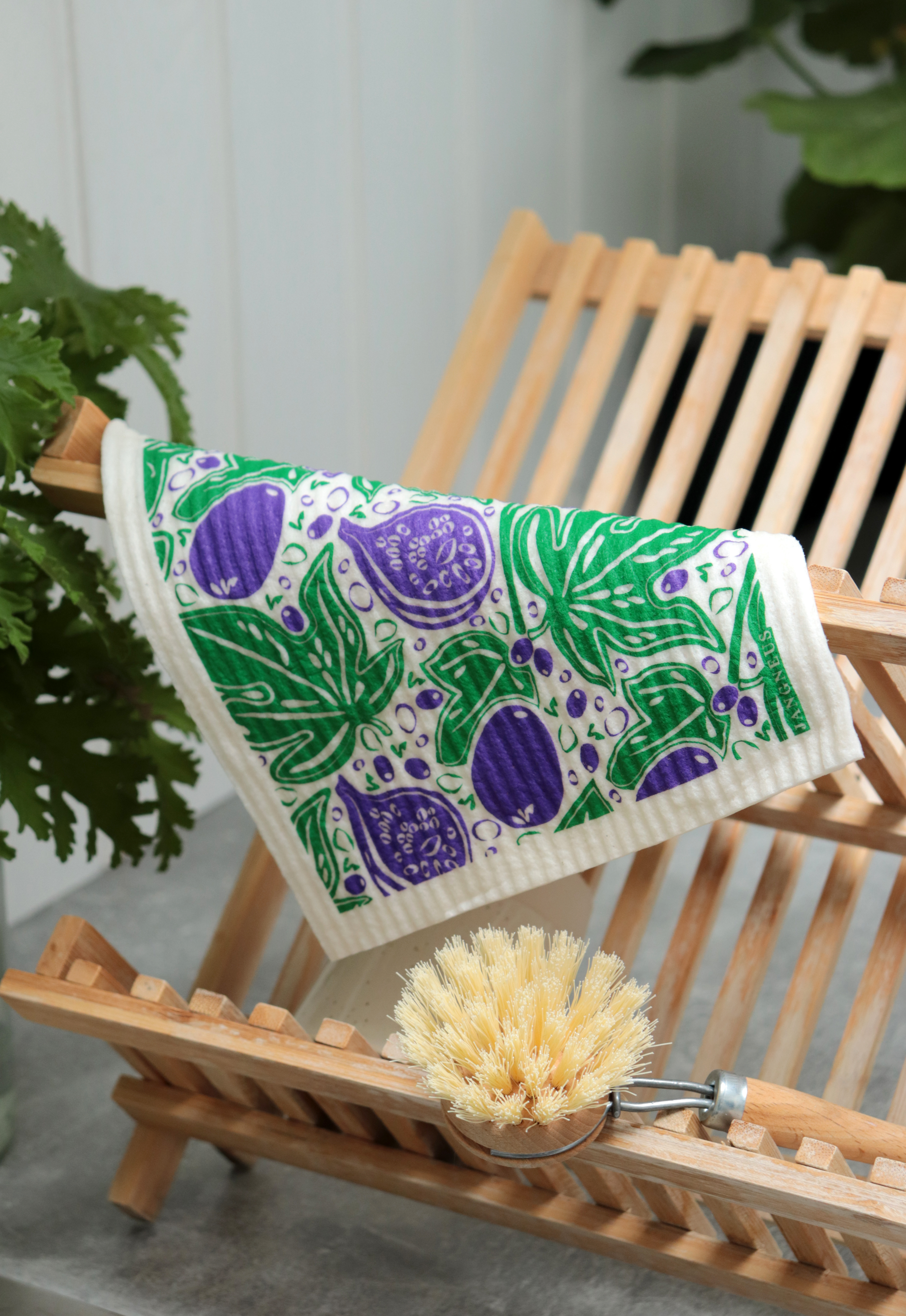
- hang it from an appropriate cloth holder;
- place it flat in a well-ventilated area;
- use another drying location that allows moisture to evaporate easily.
The exact location matters less than making sure the cloth is not left bunched up while wet.
If you use your Swedish dishcloth repeatedly throughout the day, rinse and wring it between uses and allow it to dry more fully when you are finished cleaning for the day.
How to Store a Swedish Dishcloth
Good Swedish dishcloth storage starts with making sure the cloth is clean and dry.
For a cloth that is currently in use, keep it somewhere accessible with enough airflow to dry between cleaning jobs.
For extra or unused dishcloths, store them in a clean, dry location such as:
- a kitchen drawer;
- a cabinet;
- a storage basket;
- a dedicated kitchen-linen area.
Avoid storing a damp cloth in an enclosed container or drawer. Let it dry first before putting it away.
If you keep several dishcloths, rotating them can also make everyday cleaning more convenient. One cloth can be in use while another is being washed or dried.
Does Washing Affect How Long a Swedish Dishcloth Lasts?
Regular cleaning is an important part of maintaining a reusable kitchen cloth.
However, like most reusable textiles and cleaning products, repeated use and washing will eventually create normal wear.
Follow the care instructions for your particular dishcloth and avoid cleaning methods that are unnecessarily harsh.
A balanced routine works best:
Rinse after regular use → wash when needed → dry properly → reuse
This helps keep the cloth clean without treating it more aggressively than necessary.
When Should You Replace a Swedish Dishcloth?
Instead of replacing your Swedish dishcloth according to a strict calendar, look at how well it is performing.
It may be time to replace the cloth when:
- The design starts to fade.
- staining or residue remains despite proper washing;
- the cloth has reached a condition where you simply no longer want to use it for kitchen cleaning.
Normal discoloration alone does not always mean a cloth needs immediate replacement. A reusable cleaning cloth will naturally show signs of use over time.
The more useful question is whether it is still clean, intact and performing the job you need it to do.
Ways to Help Your Swedish Dishcloth Last Longer
A few simple habits can make caring for your cloth much easier.
Rinse It After Use
Food residue and cleaning debris are easier to remove when you rinse the cloth promptly.
Avoid Leaving It Wet and Crumpled
Give the cloth enough airflow to dry between uses.
Wash It Regularly
Follow the recommended washing instructions whenever the cloth needs a deeper clean.
Rotate Multiple Cloths
Keeping more than one Swedish dishcloth in your kitchen means a single cloth does not need to handle every cleaning task every day.
Use the Right Cloth for the Right Job
For particularly dirty or demanding cleaning jobs, consider whether a different cleaning tool would be more appropriate. This can help prevent unnecessary wear on the dishcloths you primarily use for everyday kitchen cleaning.
 A Simple Swedish Dishcloth Care Routine
Swedish dishcloth care does not need to be complicated.
For daily use:
Wet → Clean → Rinse → Wring → Dry
For occasional deeper cleaning:
Wash → Dry → Store → Reuse
And when the cloth eventually becomes too worn to perform effectively, replace it with a fresh one.
Building these steps into your everyday kitchen routine can help you get consistent use from your reusable dishcloths.
Make Swedish Dishcloths Part of Your Everyday Kitchen Routine
Swedish dishcloths are useful because they combine absorbency, reusability and everyday convenience in one simple kitchen cleaning tool.
How long a Swedish dishcloth lasts depends on how it is used, washed, dried and stored. Rather than focusing on an exact lifespan, take care of the cloth properly and replace it when its condition or performance tells you it is time.
Explore the Esthetic Living Swedish Dishcloth collection for Jangneus designs that bring practical everyday cleaning together with Scandinavian-inspired patterns and color.
Frequently Asked Questions
How long do Swedish dishcloths last?
There is no single lifespan for every Swedish dishcloth. Longevity depends on frequency of use, washing habits, drying, storage and the type of cleaning tasks it is used for.
How should you dry a Swedish dishcloth?
Rinse the cloth, squeeze out excess water and leave it somewhere with good airflow. Avoid leaving it wet and crumpled in the sink.
How should Swedish dishcloths be stored?
Allow the cloth to dry before storing it. Clean, dry dishcloths can be kept in a drawer, cabinet, basket or other dry kitchen-storage area.
When should you replace a Swedish dishcloth?
Replace it when the material becomes significantly worn, torn or damaged, when it no longer performs effectively, or when it can no longer be cleaned satisfactorily.
Can you use more than one Swedish dishcloth at a time?
Yes. Rotating several cloths can be convenient, especially if you want separate cloths for different kitchen tasks or need one available while another is being washed or dried.