
Swedish Dishcloth vs. Sponge: Which Is Better for Your Kitchen?
Posted by Esthetic Living Team on Nov 23rd 2026
When it comes to everyday kitchen cleaning, most of us automatically reach for a sponge or a paper towel. But there's another option that's becoming increasingly popular: the Swedish dishcloth.
Originally developed in Sweden, these versatile cleaning cloths combine the absorbency of a sponge with the flexibility of a traditional dishcloth. They're washable, reusable, and available in beautiful designs that can complement even the most stylish kitchens.
But how do Swedish dishcloths compare with traditional kitchen sponges? Are they better for cleaning countertops, washing dishes, or absorbing spills? And can they really replace your everyday sponge?
The answer depends on what you're cleaning. Let's explore the differences and discover which option works best for your kitchen.
Swedish Dishcloth vs. Sponge: A Quick Comparison
Both Swedish dishcloths and traditional sponges are useful kitchen cleaning tools, but they have different strengths.
| Feature | Swedish Dishcloth | Traditional Kitchen Sponge |
|---|---|---|
| Countertop cleaning | Excellent for everyday wiping | Good |
| Absorbing spills | Highly absorbent | Absorbent |
| Washing dishes | Good for everyday dishwashing | Good for everyday dishwashing |
| Scrubbing stubborn food | Limited scrubbing ability | Better with a suitable scrub side |
| Machine washable | Yes, Jangneus dishcloths | Depends on the sponge |
| Drying | Thin and easy to spread out to dry | Thicker sponges may take longer |
| Reusability | Designed to be washed and reused | Depends on material and care |
| Design | Decorative patterns and colors | Usually functional in appearance |
The takeaway: A Swedish dishcloth is an excellent choice for everyday wiping, absorbing spills, and routine kitchen cleaning. A sponge or dish brush may be more suitable for stubborn food residue that requires scrubbing.
For many households, the ideal solution is to use a Swedish dishcloth for everyday cleaning and keep a separate brush or scrubber for tougher jobs.
5 Reasons to Choose a Swedish Dishcloth for Everyday Cleaning
1. Highly Absorbent for Everyday Spills
One of the biggest advantages of Swedish dishcloths is their absorbency.
Jangneus Swedish dishcloths are made from 70% cellulose and 30% cotton, a combination that absorbs water while remaining flexible when wet.
Whether you're wiping up a splash of coffee, cleaning water around the sink, or gathering crumbs from the countertop, a damp Swedish dishcloth makes everyday cleanup simple.
Unlike paper towels, which are generally discarded after use, Swedish dishcloths can be rinsed, washed, and used again.
2. Washable and Reusable
Traditional kitchen sponges can be useful, but not every sponge is designed to withstand repeated machine washing.
Jangneus Swedish dishcloths, on the other hand, are designed for regular washing and reuse.
They can be cleaned in the washing machine or placed on the top rack of a dishwasher, following the product's care instructions.
After washing, simply allow them to air dry. Avoid tumble drying.
With appropriate care, a Swedish dishcloth can last for several months, although its actual lifespan depends on how frequently it is used and washed.
This makes Swedish dishcloths a practical option for households looking to reduce their reliance on disposable paper towels and frequently replaced cleaning materials.
3. Easy to Rinse, Wring Out, and Dry
One of the most noticeable differences between a Swedish dishcloth and a traditional sponge is the shape.
A kitchen sponge is usually thick and designed to be held in the palm of your hand. A Swedish dishcloth is thin, flat, and flexible.
When dry, a Swedish dishcloth feels firm. Once wet, it becomes soft and easy to handle.
After everyday use, you can rinse it, squeeze out excess water, and hang it or spread it out where air can circulate.
Its flat construction makes it easy to leave open to dry, unlike thicker sponges that may retain moisture in their interiors.
Both tools still need regular cleaning and proper drying to remain suitable for kitchen use.
4. Versatile Enough for Many Kitchen Tasks
Swedish dishcloths are useful for much more than wiping up spills.
They can be used for a variety of everyday tasks, including:
- Wiping kitchen countertops and dining tables.
- Cleaning around the kitchen sink and faucet.
- Absorbing small spills and water splashes.
- Washing everyday dishes with suitable dish soap.
- Wiping crumbs and light food residue from washable surfaces.
Their flexibility makes them especially convenient for cleaning around fixtures, along countertop edges, and across broad surfaces.
For stubborn food stuck to pans or baking dishes, however, a dedicated dish brush or suitable non-scratch scrubber may be more effective.
A Swedish dishcloth doesn't have to replace every cleaning tool in your kitchen. It simply makes many everyday jobs easier.
5. Beautiful Designs for a Thoughtfully Styled Kitchen
Cleaning tools are not usually the first things we think about when decorating a kitchen. Yet they often remain visible beside the sink throughout the day.
This is where Jangneus Swedish dishcloths offer something different from ordinary sponges.
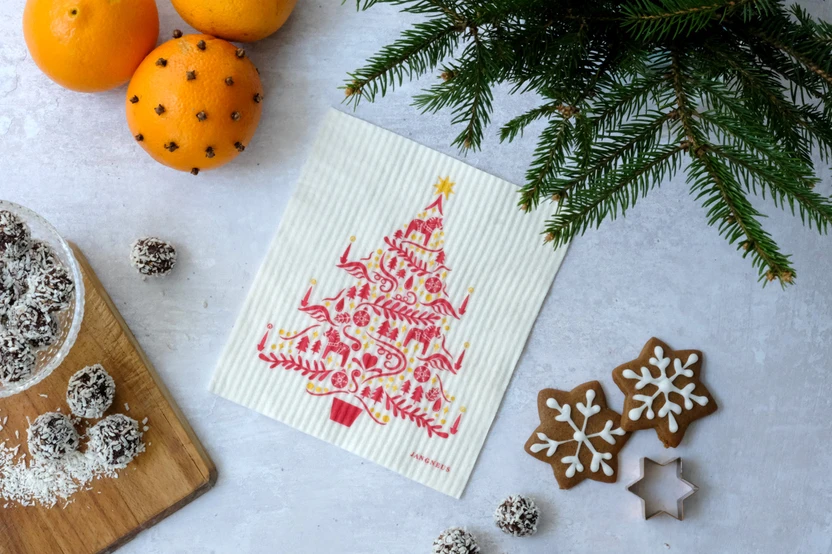
Inspired by Scandinavian design, Jangneus dishcloths feature patterns ranging from delicate florals and botanical motifs to playful illustrations and understated geometric designs.
Their compact size and attractive appearance make them easy to incorporate into a modern kitchen without adding unnecessary clutter.
Whether your kitchen is minimalist, contemporary, or traditional, choosing a design you enjoy can make an everyday household essential feel a little more special.
Explore the Jangneus Swedish dishcloth collection at Esthetic Living to discover designs for your kitchen.
Which Is Better for Different Kitchen Cleaning Tasks?
Although Swedish dishcloths are versatile, there are situations where a sponge or another cleaning tool may be preferable.
Cleaning Countertops and Tables
Best choice: Swedish dishcloth
For everyday crumbs, water rings, and light spills, a Swedish dishcloth is particularly convenient.
Its flat, flexible surface makes wiping countertops and tables easy, and it can be rinsed and reused afterward.
Always follow the surface manufacturer's cleaning recommendations, especially for delicate materials such as natural stone or specialty finishes.
Washing Glasses, Plates, and Bowls
Best choice: Either
Both a Swedish dishcloth and a kitchen sponge can work well for ordinary dishwashing.
A sponge offers a thicker grip, while a Swedish dishcloth bends easily around plates, glasses, and bowls.
Personal preference often determines which feels more comfortable.
Removing Stubborn Food From Cookware
Best choice: Sponge with a suitable scrub side or dish brush
For baked-on food or heavily soiled pans, a sponge with an appropriate scrubbing surface or a dedicated dish brush may be more effective.
Avoid abrasive tools on nonstick cookware or delicate finishes unless the manufacturer specifically permits them.
A Swedish dishcloth can be useful for the final wipe once the stubborn residue has been removed.
Absorbing Everyday Spills
Best choice: Swedish dishcloth or sponge
Both tools absorb liquid, but Swedish dishcloths are particularly convenient for routine countertop spills because they can be spread flat, wrung out, and rinsed easily.
For larger spills, you may need to rinse and wring out the cloth several times.
What About Hygiene?
Whether you prefer a Swedish dishcloth or a traditional sponge, proper cleaning habits matter.
Neither tool remains hygienic simply because it looks clean.
For everyday kitchen use, a good routine includes:
- Starting each day with a freshly laundered dishcloth and changing it sooner if it becomes soiled.
- Rinsing away ordinary food residue after use.
- Washing reusable cloths according to their care instructions.
- Allowing cloths and sponges to dry with adequate airflow.
- Keeping cleaning tools used in bathrooms or on floors separate from kitchen cleaning essentials.
For surfaces contaminated by raw meat, poultry, or seafood juices, follow appropriate food-safety cleaning and sanitizing guidance rather than relying on a quick wipe with an everyday cloth.
For more information, read our complete guide to washing and caring for Swedish dishcloths.
Can Swedish Dishcloths Replace Kitchen Sponges Completely?
For many everyday cleaning tasks, yes.
If you primarily use a sponge to wipe countertops, absorb spills, or clean around the sink, a Swedish dishcloth may be a convenient replacement.
However, you may still want a separate brush or non-scratch scrubber for stubborn food residue.
A simple kitchen cleaning setup could include:
- Two or three Swedish dishcloths: One for everyday wiping, with clean replacements ready when needed.
- One dish brush or suitable scrubber: For pots, pans, and stubborn food residue.
- Clean cotton kitchen towels: Reserved for drying hands and appropriate dish-drying tasks.
This approach keeps your cleaning essentials simple while ensuring you have the right tool for different jobs.
If you're new to Swedish dishcloths, our guide to using Swedish dishcloths offers practical tips to help you get started.
Frequently Asked Questions
Are Swedish dishcloths better than regular kitchen sponges?
Swedish dishcloths are particularly convenient for everyday countertop cleaning, absorbing spills, and routine wiping. Traditional sponges with a suitable scrub side may be better for removing stubborn food residue. The best choice depends on the cleaning task.
Can you wash Swedish dishcloths in the washing machine?
Yes. Jangneus Swedish dishcloths are machine washable. Follow the care instructions and allow them to air dry after washing. Do not tumble dry.
Do Swedish dishcloths dry faster than sponges?
Their thin, flat construction makes Swedish dishcloths easy to spread out or hang for drying. Thick sponges may retain moisture longer, although actual drying times depend on the material, airflow, and surrounding conditions.
How long do Swedish dishcloths last?
With proper care, Swedish dishcloths can last for several months. Their lifespan depends on frequency of use, washing habits, and the type of cleaning tasks performed.
Replace a dishcloth when it becomes worn, damaged, or develops persistent odors despite proper washing.
Can I use a Swedish dishcloth instead of paper towels?
Yes, for many routine kitchen tasks. Swedish dishcloths can be used to wipe countertops, absorb everyday spills, and clean suitable surfaces, reducing the need for disposable paper towels.
Should I keep more than one Swedish dishcloth?
Keeping two or three Swedish dishcloths is a practical starting point for many kitchens. This allows you to rotate clean cloths while others are being washed or dried.
The Bottom Line: A Simple Upgrade for Everyday Kitchen Cleaning
Both Swedish dishcloths and traditional kitchen sponges have their place.
A sponge or brush can be useful when you need extra scrubbing power, while a Swedish dishcloth offers a flexible, absorbent, and reusable solution for many everyday cleaning tasks.
You don't need to eliminate every sponge from your kitchen to enjoy the benefits of Swedish dishcloths.
Start by replacing your everyday countertop sponge with a washable Swedish dishcloth and see how it fits into your cleaning routine.
At Esthetic Living, we believe even the simplest household essentials can combine thoughtful design with everyday practicality.
Discover the Jangneus Swedish dishcloth collection and bring a little Scandinavian-inspired style to your kitchen.