
Best Kitchen Towel Material: Cotton vs Linen vs Microfiber
Posted by Esthetic Living Team on Oct 19th 2026
The Best Kitchen Towel Material Depends on the Job
Choosing the best kitchen towel material sounds straightforward until you start comparing cotton, linen and microfiber. All three can be useful in a kitchen, but they feel different, dry differently and suit different tasks. A towel used for drying dishes may not be your first choice for wiping hands, polishing glasses or lining a bread basket.
Instead of looking for one winner in every category, it helps to understand what each fabric does well and what you need your towels to handle most often. The weave, thickness and construction of the towel matter alongside the fiber itself.
1. Cotton Kitchen Towels: The Everyday All-Rounder
A cotton kitchen towel is a practical choice for homes that use towels throughout the day. Cotton feels familiar, is generally comfortable against hands and can be absorbent enough for drying dishes and everyday kitchen tasks. Woven cotton towels can also be folded, hung and used for serving without the bulk of thick terry cloth.
Cotton towels vary widely. A smooth, tightly woven towel will behave differently from a fluffy looped towel, even when both are labeled 100% cotton. That is why checking the fabric and intended purpose is more useful than relying only on the material name.
Where cotton works well
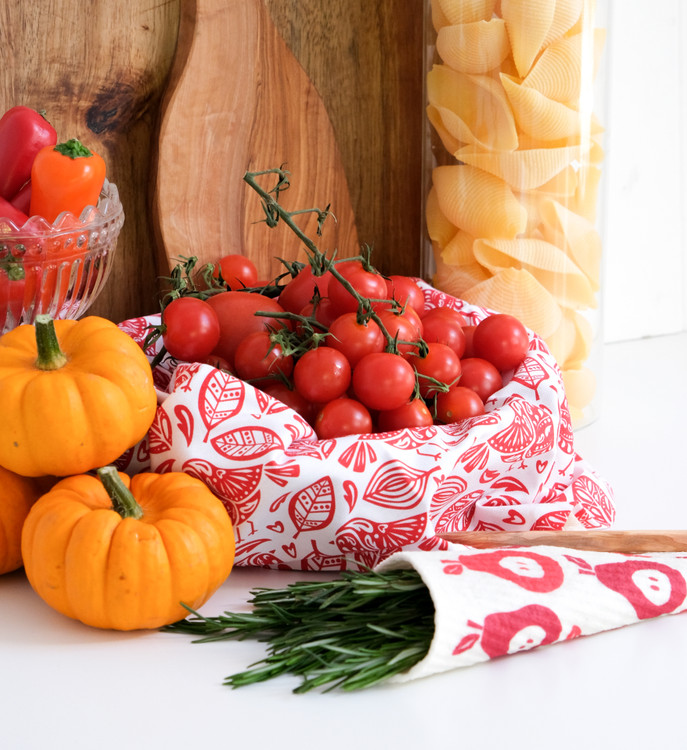
Cotton is a good all-purpose option for drying hands and dishes, lining a bread basket with a clean towel or adding color beside the sink. It is also easy to rotate several machine-washable towels through the week. If you want a towel that feels at home both during cooking and on display, cotton is a sensible starting point.
2. Linen Kitchen Towels: Lightweight and Quick to Dry
Linen is made from flax fiber and is often appreciated for its crisp feel and relatively quick drying. It can be a good option for drying glassware or delicate pieces, particularly when the weave sheds little lint. Some people also like the slightly textured, lived-in appearance that linen develops with use.
Linen can feel firmer than cotton when new and may wrinkle more visibly. It is worth checking the care label and fabric weave, especially if you prefer a soft towel straight away. A linen tea towel is often chosen as much for its lightweight feel as for the way it looks in a simple kitchen.
3. Microfiber Kitchen Towels: Designed for Wiping and Polishing
Microfiber towels are commonly made from very fine synthetic fibers, often polyester and polyamide. Depending on their construction, they can pick up moisture and fine particles efficiently, making them useful for wiping surfaces and polishing certain items.
Their feel is different from traditional woven cotton or linen tea towels. Some people prefer a natural-fiber towel for everyday serving and visible kitchen textiles, while keeping microfiber for a more specific cleaning purpose. Microfiber also requires following its care instructions: fabric softener and high heat can reduce the performance of some products.
4. What Matters More: Absorbency, Drying Time or Texture?
The best kitchen towel material depends on which quality matters most in daily use. Absorbency helps when drying plates and hands. Drying time matters when towels are used repeatedly near the sink. Texture matters when handling glassware or folding a towel beneath serving dishes.
No fiber automatically guarantees the best performance in every towel. A dense cotton weave may absorb and feel very different from a lightweight cotton weave; linen and microfiber also come in many constructions. If possible, consider the towel’s weight, weave, care instructions and intended use together.
5. Which Material Should You Choose for Common Kitchen Tasks?
For general dish drying and wiping hands, a washable cotton towel is a versatile option. For polishing glassware, some people favor a smooth, low-lint linen towel or a microfiber cloth designed for glass. For surface cleaning, a dedicated microfiber cloth or reusable Swedish dishcloth may be more practical than a towel used for clean dishes.
For serving, bread baskets and a towel kept on display, many households enjoy woven cotton or linen. The fabric should be clean and appropriate for the food-contact use. Keeping different towels for different jobs can be more useful than expecting one material to handle everything.
6. Material Is Only Part of a Good Kitchen Towel
Before choosing a tea towel or kitchen towel, consider size, washability and how easily it hangs near the sink. A towel can have an appealing fabric label but still be too small, awkwardly thick or slow to dry for the way you cook.
Jangneus kitchen towels offered by Esthetic Living are designed in Sweden, with Scandinavian-inspired patterns that coordinate with reusable dishcloths. The current cotton towel range is designed to be useful in daily kitchen life while also bringing pattern and color to the room. For a coordinated routine, a kitchen towel can be paired with Swedish dishcloths for wiping and cleaning.
7. Care and Rotation Matter Whatever You Buy
Even the best material needs regular washing. Keep a clean towel for dishes and another for hands when possible. Replace towels that become wet, soiled or contaminated during food preparation, and let used towels dry openly rather than leaving them crumpled.
Follow the manufacturer’s care instructions, especially for mixed fabrics and microfiber. A small rotation of well-chosen towels often makes kitchen routines easier than relying on one towel all day.
The Bottom Line: Cotton, Linen or Microfiber?
If you want an everyday all-rounder, cotton is a strong choice. If you prefer a lightweight woven towel for drying and glassware, linen may suit you. If your priority is dedicated surface cleaning or polishing, microfiber can have a useful role.
The best kitchen towel material is the one that matches the job, feels comfortable in your hands and fits the way your household actually works. Choose for function first, then pick a pattern or texture you enjoy seeing every day.